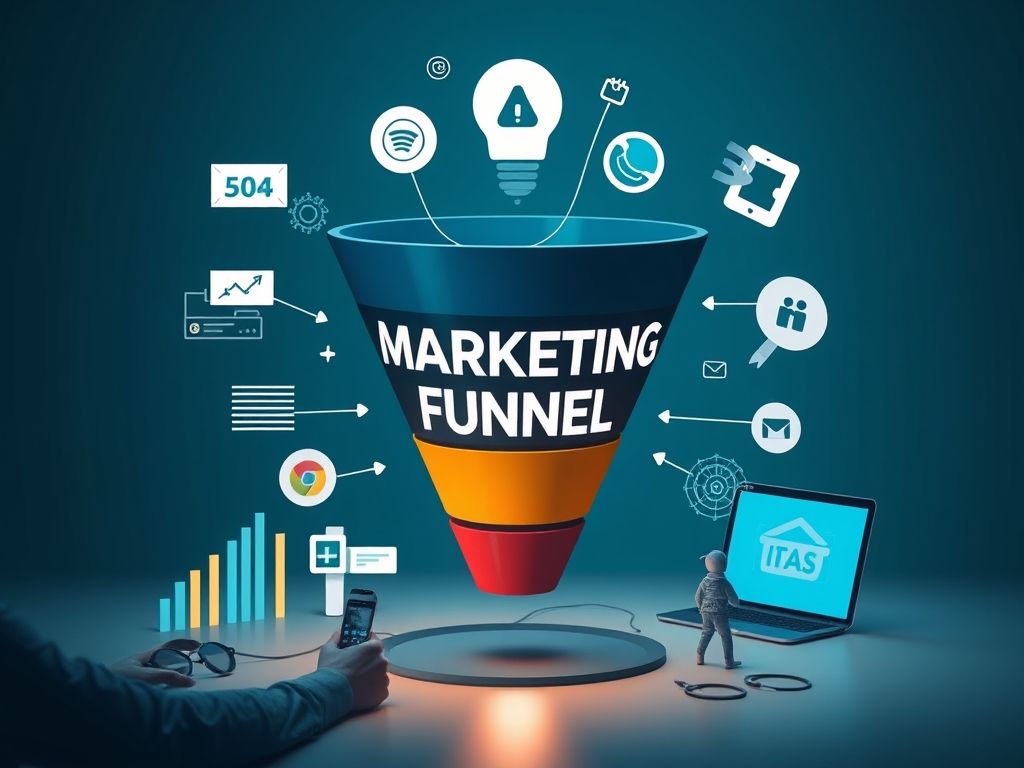

Understanding the Marketing Funnel
The Marketing Funnel is a model that illustrates the journey potential customers go through before making a purchase. It visually represents the stages from initial awareness to final decision-making, helping marketers strategize their tactics to guide prospects through each phase effectively.
Importance of the Marketing Funnel in Digital Marketing
In the realm of digital marketing, understanding the marketing funnel is crucial. It allows businesses to identify where their target audience is in the buying process and tailor their messaging accordingly. By aligning marketing efforts with the customer’s journey, brands can enhance user experience and increase conversion rates.
The Stages of the Marketing Funnel
- Awareness: At this stage, potential customers become aware of a brand or product through various channels such as social media, search engines, or word-of-mouth.
- Interest: After awareness, prospects show interest by seeking more information, visiting websites, or engaging with content.
- Consideration: Here, customers evaluate their options and compare different products or services, often influenced by reviews and testimonials.
- Intent: At this stage, potential buyers demonstrate their intent to purchase, such as adding items to a cart or signing up for a trial.
- Purchase: The final stage occurs when the customer completes the transaction, resulting in a sale.
Real-World Examples of the Marketing Funnel
Consider an online shoe retailer. In the awareness stage, a customer sees an advertisement on social media. In the interest phase, they visit the retailer’s website and browse various shoe styles. During the consideration phase, they read customer reviews and compare prices with competitors. When they add shoes to their cart, they enter the intent stage, and finally, they complete their purchase, marking the purchase stage.
How to Optimize Each Stage of the Marketing Funnel
Optimizing each stage of the marketing funnel involves using targeted strategies to engage customers effectively. Here’s how:
- Awareness: Utilize SEO, PPC campaigns, and social media marketing to reach a broader audience.
- Interest: Create high-quality content that educates and informs potential customers about your products.
- Consideration: Use email marketing and retargeting ads to remind prospects of their interest and provide them with incentives.
- Intent: Offer limited-time discounts or free trials to encourage prospects to make a purchase.
- Purchase: Ensure a seamless checkout process to minimize cart abandonment.
Practical Applications of the Marketing Funnel
Understanding how to apply the marketing funnel in practice can significantly enhance your marketing efforts. Here are some practical applications:
- Content Marketing: Develop content that resonates with each stage of the funnel to guide customers through their journey.
- Email Campaigns: Segment your email lists to target customers based on their stage in the funnel, providing tailored content and offers.
- Analytics and Tracking: Use analytics tools to monitor how users move through the funnel and identify bottlenecks or drop-off points.
- Customer Feedback: Collect feedback at various stages to understand customer needs and improve the overall experience.
Related Concepts to the Marketing Funnel
Several concepts are interconnected with the marketing funnel, enhancing its effectiveness:
- Customer Journey: This refers to the complete experience a customer has with a brand, which includes the marketing funnel stages.
- Lead Generation: The process of attracting and converting prospects into leads that can be nurtured through the funnel.
- Conversion Rate Optimization (CRO): Techniques used to increase the percentage of visitors who complete a desired action, such as making a purchase.
- Customer Relationship Management (CRM): A strategy for managing a company’s interactions with current and potential customers, supporting the funnel process.
Conclusion: Making the Marketing Funnel Work for You
Understanding the marketing funnel is essential for any digital marketer. By effectively navigating each stage, businesses can enhance customer experiences, boost conversion rates, and drive sales growth. Consider implementing these strategies in your marketing efforts to see tangible results.
Reflect on how you can apply the insights from this guide to your digital marketing strategy. Whether it’s refining your content marketing efforts or enhancing your customer relationship management, the marketing funnel is a powerful tool to guide your approach.