



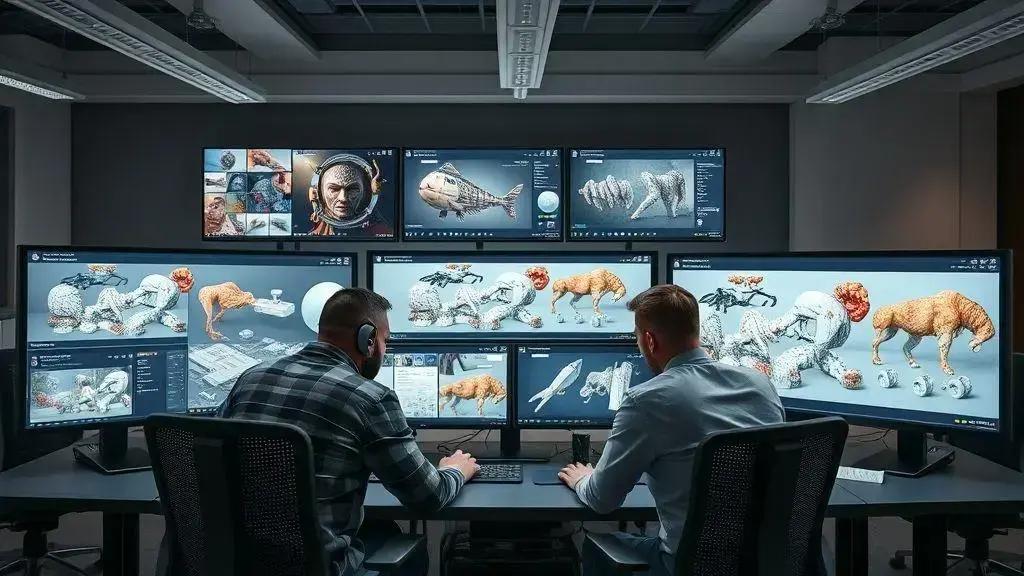

The partnership between EA and Stability AI is revolutionizing 3D asset creation in game development by leveraging generative AI to overcome traditional challenges like time, cost, and consistency. This collaboration aims to accelerate content production, enhance visual quality through technologies like PBR materials for greater realism, and transform developer workflows by automating repetitive tasks. The integration of AI promises increased efficiency, new creative possibilities, smarter in-game elements, and personalized player experiences, ultimately driving significant innovation in the future of game design.
Welcome to the fascinating world of 3D Asset Creation! In a recent collaboration, Electronic Arts (EA) partnered with Stability AI to revolutionize how 3D assets are developed for gaming. This partnership aims to solve the challenges faced in content creation, particularly in creating lifelike visuals for video games. What does this mean for developers and gamers alike? Let’s dive in to explore!
Overview of EA and Stability AI Partnership
Electronic Arts, widely known as EA, recently announced a significant partnership with Stability AI. This collaboration marks a big step forward for the gaming world. The main goal is to transform how 3D asset creation works for video games. Think about all the characters, environments, and items you see in your favorite games. Creating these detailed elements traditionally takes a lot of time and effort from skilled artists.
Stability AI is a leader in generative artificial intelligence. Their advanced technology can create new content from existing data. By teaming up with EA, they aim to make the asset creation process much faster and more efficient. This means game developers could spend less time on repetitive, manual tasks. Instead, they can focus more on creative design, storytelling, and innovative gameplay. This partnership could truly redefine the speed and scope of game development.
EA develops some of the biggest and most popular games globally. They constantly need new, highly detailed 3D assets to keep their titles fresh and engaging. From realistic sports stadiums to expansive fantasy worlds, the demand for high-quality visuals is immense. This partnership helps meet that demand by exploring new, AI-driven ways to generate these assets. This could lead to more immersive and visually stunning games for players everywhere, enhancing their overall experience.
The collaboration is not just about increasing speed. It also places a strong emphasis on maintaining and improving quality. Generative AI can help create assets that are consistent, realistic, and adhere to specific artistic styles. This is especially important for modern games that strive for photorealism and a cohesive aesthetic. Imagine AI helping artists quickly generate variations of a tree, a building, or even a character’s clothing. This frees up human artists to refine and perfect the unique, artistic elements of a game, adding that special touch.
This strategic move clearly shows how much the gaming industry is embracing AI. It’s no longer just a tool for simple automation. AI is becoming a powerful creative partner in the development process. The partnership between EA and Stability AI is a prime example of this growing trend. It highlights a future where AI assists artists in building richer, more detailed, and more dynamic game worlds. This could mean more games, developed faster, and with even better graphics and realism. It’s an exciting time for both game developers and the millions of gamers around the globe.
The potential impact of this partnership could be far-reaching across the entire industry. It might set new standards for how game content is produced and integrated. Other game studios might observe this successful model and adopt similar AI-driven strategies. This could push the entire game development industry forward, fostering innovation. Ultimately, players will benefit from more innovative, visually impressive, and frequently updated gaming experiences. It’s a win-win situation for everyone involved in the world of interactive entertainment.
Challenges in 3D Asset Creation
Creating detailed 3D assets for video games is a huge job. It’s one of the toughest parts of making a game. Artists spend countless hours building characters, environments, and objects. Each tiny detail needs careful attention. This manual process is very time-consuming. Imagine making every leaf on a tree or every brick on a building by hand. It takes a lot of effort and patience.
The demand for realism in games keeps growing. Players expect stunning visuals and lifelike worlds. This means artists must create incredibly detailed models and textures. Achieving this level of quality requires specialized skills. It also demands powerful software and hardware. The complexity of these tasks adds to the overall challenge. It’s not just about drawing; it’s about sculpting, texturing, and lighting digital forms.
Another big hurdle is the cost. Hiring skilled 3D artists is expensive. They need years of training and experience. A large game project might need hundreds or even thousands of unique assets. Each asset adds to the budget. This makes game development challenges even bigger for studios. They need to balance quality with financial limits. Finding enough talented artists for every project can also be tough.
Keeping things consistent across a game is also hard. Different artists might work on different parts of the game. Ensuring all assets match the same art style is crucial. If a tree in one area looks different from a tree in another, it can break the game’s immersion. This requires strict guidelines and constant review. It’s a big management task to keep everything looking cohesive and professional.
The sheer volume of assets needed for modern open-world games is staggering. Think about a vast city or a huge natural landscape. Every building, car, plant, and rock is a separate 3D asset. Manually creating all these unique items is almost impossible. Developers often reuse assets, but players notice repetition. They want variety and fresh experiences. This pushes studios to find new ways to generate content.
Technical issues also pop up often. 3D asset creation involves complex software. Artists deal with things like polygon counts, texture resolutions, and rigging. Rigging is like creating a skeleton for a character so it can move. These technical details can be tricky. Mistakes can lead to visual glitches or performance problems in the game. Fixing these errors takes even more time and resources.
Finally, the iterative nature of game development adds to the challenges. Artists often create an asset, get feedback, and then revise it. This cycle can happen many times before an asset is perfect. Changes in game design can mean assets need to be redone entirely. This constant back-and-forth can be frustrating. It also extends development timelines. Overcoming these hurdles is key to making great games efficiently.
The Role of Generative AI in Gaming
Generative AI is changing how we make things, especially in gaming. This special kind of artificial intelligence can create brand new content. It learns from lots of existing data. Then, it uses what it learned to make something fresh. Imagine a computer that can draw or sculpt. That’s a bit like what generative AI does for 3D assets in games.
In the past, every single tree, rock, or character model had to be made by hand. This took a huge amount of time. Artists would spend weeks or months on detailed work. Now, generative AI can help speed this up. It can quickly generate many variations of an object. This means game developers can get more content faster. It really helps with the massive scale of modern games.
Think about building a huge open world. You need countless unique items and environments. Generative AI can create these elements almost on demand. It can design different types of buildings or varied landscapes. This saves human artists from doing repetitive tasks. They can focus on the truly unique and creative parts. This makes the whole game development process much more efficient.
This technology also helps with consistency. AI can learn a specific art style. Then, it can generate new assets that perfectly match that style. This ensures everything in the game looks cohesive. It helps maintain the overall visual quality. Players get a more immersive experience when everything fits together well. It’s a big win for artistic direction.
Generative AI isn’t just for big objects. It can also create textures, materials, and even animations. For example, it could generate different types of wood grain or metal surfaces. It can even help design character movements. This makes the process of 3D asset creation much more dynamic. Artists can experiment more easily with different looks and feels.
The role of generative AI in gaming is to be a powerful assistant. It doesn’t replace human creativity. Instead, it empowers artists and designers. It gives them tools to build bigger, richer, and more detailed worlds. They can push creative boundaries further. This leads to more innovative and exciting games for everyone to play. It’s truly a game-changer for the industry.
This technology is still growing and getting better. As it improves, we’ll see even more amazing things. Games might have endless variations of content. Or they could adapt to players in new ways. The future of AI in gaming looks very bright. It promises to unlock new levels of creativity and efficiency for developers. And that means more incredible experiences for gamers.
Benefits of Merging AI with Game Development
Merging Artificial Intelligence (AI) with game development brings many exciting advantages. One of the biggest benefits is how much faster things can get done. AI tools can automate many repetitive tasks. This includes generating basic 3D assets, textures, or even simple level layouts. Artists and designers can then focus on more complex and creative work. It truly speeds up the entire production pipeline.
Think about creating a vast open world in a game. You need countless trees, rocks, buildings, and other objects. Manually making each one takes ages. With AI, developers can generate many variations of these assets quickly. This means less time spent on grunt work. It also means more unique content for players to explore. This boosts both efficiency and the overall quality of the game world.
AI also helps improve the visual quality and consistency of games. It can learn a specific art style from existing assets. Then, it can create new assets that perfectly match that style. This ensures everything in the game looks cohesive and professional. Players get a more immersive experience when visuals are consistent. This is a huge win for maintaining a high standard of graphics.
Another key benefit is cost reduction. When AI handles some of the labor-intensive tasks, studios need fewer human hours for those specific jobs. This can lead to significant savings on development budgets. These saved resources can then be put into other areas. For example, they might invest more in storytelling, unique gameplay mechanics, or advanced physics. This allows for a better overall game.
AI also opens doors to new creative possibilities. Developers can experiment with ideas much faster. They can generate many prototypes of game elements. This allows them to test different concepts quickly. It encourages innovation and helps teams discover fresh gameplay ideas. This means more unique and engaging experiences for players. It pushes the boundaries of what games can be.
Furthermore, AI can help with personalization in games. It can learn player preferences and adapt content accordingly. Imagine game worlds that change based on your play style. Or characters that react uniquely to your decisions. This makes games feel more alive and tailored to each individual. It creates a deeper connection between the player and the game world.
In summary, bringing AI into game development makes the process more efficient, cost-effective, and creative. It helps produce higher quality visuals and allows for greater innovation. This partnership between human talent and advanced technology is shaping the future of gaming. It promises more immersive, diverse, and exciting experiences for everyone who loves to play.
How PBR Materials Improve Visual Quality
When we talk about amazing graphics in games, PBR materials play a huge role. PBR stands for Physically Based Rendering. It’s a way of creating digital materials that look and act like real-world materials. This means light interacts with them just like it would in real life. This makes everything in a game look much more realistic and believable. It’s a big step up from older rendering methods.
Before PBR, artists often had to guess how light would hit a surface. They’d paint highlights and shadows directly onto textures. This made it hard to get consistent lighting across a scene. With PBR, the material itself knows how to react to light. This makes the job easier for artists. They can focus on creating the material’s properties, not just its appearance. This leads to better and more consistent visual quality.
So, how do PBR materials work? They use several different textures, or “maps,” to describe a surface. One important map is the Albedo or Base Color map. This shows the pure color of the surface, without any lighting. Another is the Metallic map. It tells the game engine if a surface is metal or not. Metals reflect light differently than non-metals. This map helps the engine get that right.
Then there’s the Roughness map. This map tells us how smooth or rough a surface is. A very smooth surface, like polished chrome, will have sharp reflections. A rough surface, like concrete, will scatter light more. This makes it look duller. Getting roughness right is key for realism. It makes surfaces feel tangible and real.
The Normal map is also super important. It adds tiny details to a surface without needing more polygons. Imagine a brick wall. Instead of modeling every bump and groove, a normal map fakes those details. It tells the light how to bounce off these fake bumps. This makes surfaces look incredibly detailed, even from up close. It saves a lot of computing power too.
Finally, there’s the Ambient Occlusion map. This map helps add subtle shadows where surfaces meet. Think about the tiny dark areas in a corner or under a button. Ambient occlusion makes these areas look more grounded. It adds depth and realism without needing complex lighting calculations. All these maps work together to create incredibly lifelike 3D assets.
The benefits of PBR materials for game development are clear. Games look more realistic and immersive. Artists can create content faster and with more consistency. The lighting in a scene looks natural, no matter where the light source is. This technology is essential for modern games. It’s what helps make those stunning visuals we all enjoy. It truly elevates the art of digital creation.
Workflow Transformations for Game Developers
The way game developers work is changing a lot, thanks to new tools. Especially with generative AI, like what Stability AI offers, the whole process of 3D asset creation is getting a big makeover. Before, artists spent many hours on repetitive tasks. They would manually sculpt and texture every single item. This took a lot of time and could slow down game projects.
Now, AI can handle many of these routine jobs. Imagine needing hundreds of different rocks for a game world. An artist used to make each one. With AI, they can generate many unique rock models quickly. This frees up the artist to focus on more important things. They can spend their time on unique characters or special environments. This makes the workflow much more efficient.
Faster Iteration and Prototyping
One huge change is how fast developers can try out new ideas. AI allows for rapid prototyping. Artists can generate many versions of an asset in minutes. They can quickly see what works and what doesn’t. This means they can experiment more. They can refine their designs much faster than before. This quick feedback loop helps create better games.
This speed also means more content can be made. Games are getting bigger and more detailed. Players expect vast worlds to explore. AI helps meet this demand. It allows studios to fill these worlds with rich, varied 3D assets. This would be nearly impossible with only manual labor. So, players get more to see and do in their favorite games.
Focus on Creativity and Innovation
With AI taking over the mundane tasks, human creativity can truly shine. Developers aren’t just button-pushers anymore. They become more like directors or curators. They guide the AI to create what they envision. This shift allows them to focus on the artistic vision. They can spend more time on storytelling, unique gameplay, and innovative design. This makes their jobs more rewarding and creative.
AI also helps maintain visual consistency across a game. It can learn a specific art style. Then, it generates new assets that perfectly match that style. This ensures all parts of the game look like they belong together. It avoids jarring visual differences. This consistency makes the game world feel more real and immersive for players. It’s a big boost to overall quality.
New Skills and Collaboration
Game developers now need to learn new skills. They must understand how to work with AI tools. This means learning prompts, parameters, and how to refine AI outputs. It’s a new way of thinking about design. Collaboration also changes. Artists and programmers might work even closer. They’ll team up to get the best results from AI. This creates a more integrated and dynamic development team.
The transformation is about empowering developers. It’s not about replacing them. AI is a powerful assistant that takes away the tedious parts. It lets human talent focus on what they do best: creating amazing experiences. This new workflow promises a future with more innovative, beautiful, and engaging video games for everyone.
Future Prospects of AI in Game Design
The future of AI in game design looks incredibly exciting. We’re just starting to see what artificial intelligence can do. Soon, AI won’t just help create assets. It will play a much bigger role in how games are made and played. Imagine games that feel truly alive and unique every time you play them. That’s where we’re headed with AI.
One big area is procedural content generation. This means AI can create entire game worlds on its own. It can design vast landscapes, unique cities, and intricate dungeons. This would make games feel endless and always fresh. Players could explore worlds no one has ever seen before. This goes beyond just making 3D assets; it’s about building entire universes.
Smarter Non-Player Characters (NPCs)
AI will also make non-player characters much smarter. NPCs are the characters in games that aren’t controlled by a player. Right now, they often follow simple rules. In the future, AI could give them real personalities. They might learn from your actions and react in surprising ways. This would make game worlds feel more believable. Interacting with NPCs would be much more engaging.
Think about enemies that learn your fighting style. Or allies that remember your past deeds. This level of intelligence would make every game session unique. It would add a lot of depth to the gameplay. This is a huge step forward for immersion. It makes the game world feel truly responsive to you.
Personalized Player Experiences
AI can also personalize the game experience for each player. It could adjust the difficulty based on how well you’re doing. If you’re struggling, the game might get a little easier. If you’re a pro, it could offer tougher challenges. This ensures everyone has a fun and balanced experience. It makes games more accessible and enjoyable for all skill levels.
Beyond difficulty, AI could tailor storylines or quests. It might suggest activities based on your play history. This creates a game that feels made just for you. It’s about making the game adapt to your preferences. This level of personalization will make games incredibly engaging. It will keep players coming back for more.
AI for Game Testing and Quality
Another important role for AI is in testing games. Finding bugs in huge, complex games is very hard. AI can play games tirelessly, looking for glitches and errors. It can test millions of scenarios much faster than humans. This helps developers release more polished games. It means fewer frustrating bugs for players. This improves the overall quality of the gaming experience significantly.
AI can also help with balancing game mechanics. It can simulate many play sessions. Then, it can find out if certain weapons or abilities are too strong or too weak. This helps developers create fair and fun gameplay. It ensures that every part of the game feels just right. This makes for a more competitive and enjoyable experience.
The future of game development with AI is about enhancing creativity, not replacing it. AI will be a powerful tool that helps human designers. It will allow them to build bigger, more complex, and more personal games. The possibilities are truly endless. We’re on the brink of a new era in gaming, where AI helps create experiences we can only dream of today.