




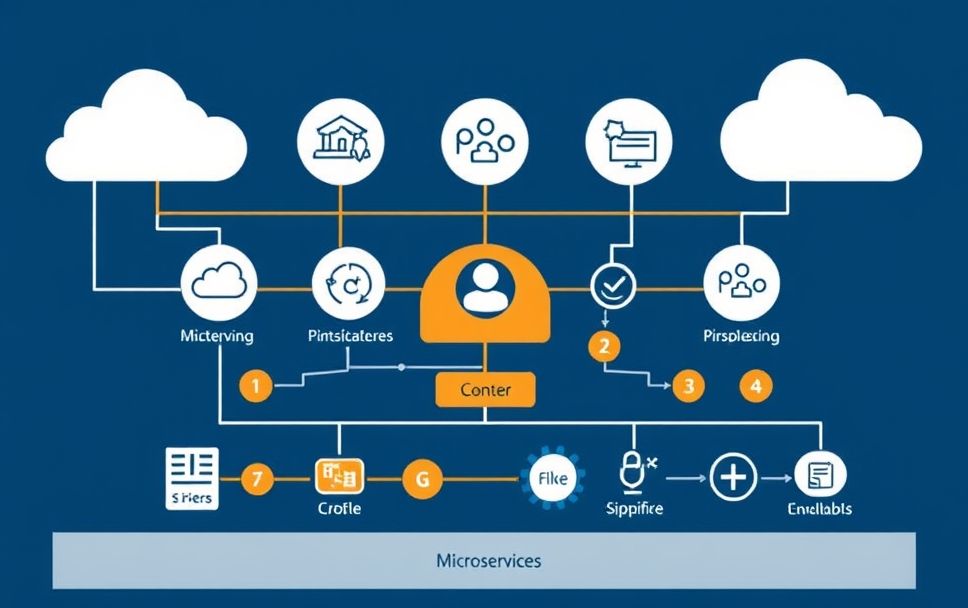

Understanding Microservices Architecture
Microservices architecture is a software design approach that structures an application as a collection of loosely coupled services. Each service is self-contained, can be developed, deployed, and scaled independently, and communicates with others through well-defined APIs. This architecture contrasts with traditional monolithic architectures, where components are interconnected and interdependent.
The Importance of Microservices Architecture
In today’s fast-paced development environment, organizations require agility, scalability, and resilience in their software solutions. Microservices architecture offers several advantages that address these needs:
- Scalability: Each service can be scaled independently, allowing organizations to allocate resources where they are most needed.
- Flexibility: Developers can use different technologies and programming languages for different services, optimizing them for specific tasks.
- Resilience: If one service fails, it doesn’t bring down the entire application, improving overall reliability.
- Faster Time to Market: Teams can work on services simultaneously, reducing the time needed to develop and deploy features.
Key Components of Microservices Architecture
Understanding the components that make up microservices architecture is essential for implementing it effectively. Here are the main elements:
- Service Discovery: Tools like Eureka or Consul help services find and communicate with each other dynamically.
- API Gateway: Acts as a single entry point for clients, routing requests to the appropriate services and managing cross-cutting concerns like security and logging.
- Data Management: Each service typically manages its own database, promoting independence and reducing coupling.
- Containerization: Technologies like Docker allow services to be packaged with their dependencies, ensuring consistent environments across development and production.
Real-World Examples of Microservices Architecture
Many leading tech companies have successfully implemented microservices architecture, demonstrating its effectiveness:
- Netflix: Utilizes microservices to handle millions of users and content streams, allowing for seamless scaling and continuous delivery.
- Amazon: Each part of the shopping experience (search, recommendations, purchasing) is handled by separate services, enabling quick updates and innovation.
- Spotify: Employs microservices to manage its music streaming service, ensuring rapid deployment of new features without downtime.
Applications of Microservices in Daily Development
Microservices can be integrated into everyday development practices, enhancing productivity and performance:
- Agile Development: Teams can adopt Agile methodologies more effectively by working on independent services.
- DevOps Practices: Microservices support continuous integration and continuous deployment (CI/CD) pipelines, allowing for automated testing and deployment.
- API-First Design: Encourages the development of service APIs before implementation, ensuring clear communication between services from the start.
Challenges and Considerations
While microservices architecture offers numerous advantages, there are also challenges to be aware of:
- Complexity: Managing multiple services can become complicated, requiring robust monitoring and logging solutions.
- Data Consistency: Ensuring data consistency across services can be challenging, necessitating careful design of data management strategies.
- Network Latency: Increased communication between services can lead to higher latency, which needs to be mitigated through optimized network strategies.
Conclusion: The Future of Microservices Architecture
Microservices architecture is not just a trend; it is shaping the future of software development. As organizations increasingly adopt this approach, the ability to innovate quickly and reliably becomes paramount. By understanding microservices, developers and IT professionals can embrace a modern development paradigm that enhances flexibility, scalability, and resilience.
As you consider implementing microservices in your projects, reflect on how these principles can transform your workflow and lead to more effective software solutions. Start small, iterate, and you’ll find that microservices can significantly enhance your development capabilities.
Related Concepts
To deepen your understanding of microservices architecture, consider exploring these related concepts:
- Continuous Integration/Continuous Deployment (CI/CD): A method to automate the integration and deployment of code changes.
- Containers and Orchestration: Technologies like Kubernetes that manage containerized applications.
- API Management: Strategies for managing APIs effectively across various services.