




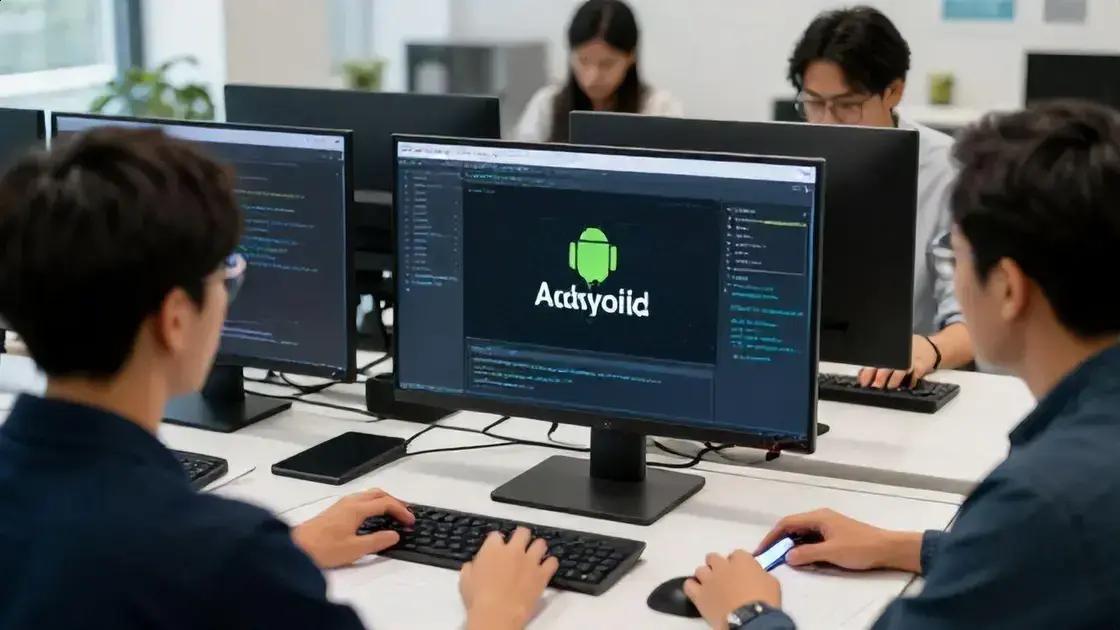

Future plans for AI model benchmarking focus on creating standardized metrics, incorporating real-world scenarios, and enhancing transparency. These developments aim to improve the evaluation of AI models, ensuring they perform effectively in diverse conditions. By emphasizing collaboration among developers and utilizing advanced technologies, the benchmarking process will become more efficient and reliable, ultimately leading to better AI applications that meet user needs.
In the evolving world of technology, AI Models are becoming crucial for Android development. Google has introduced a new benchmark that helps developers evaluate these models effectively.
Benchmarking AI Models for Android Development
Benchmarking AI models for Android development is an important step for developers. It helps them choose the best tools for their projects. With many options available, knowing which model performs best can save time and resources.
What is Benchmarking?
Benchmarking is the process of comparing different models to see how well they perform. This can include speed, accuracy, and efficiency. By testing these models, developers can find the one that fits their needs the best.
Why is it Important?
Using the right AI model can make a big difference in app performance. A well-benchmarked model can enhance user experience. It ensures that the app runs smoothly and responds quickly. This is crucial for keeping users engaged and satisfied.
How to Benchmark AI Models
To benchmark AI models, developers first need to set clear goals. What do they want to achieve? Next, they should select the models they want to test. Once chosen, they can run tests to gather data on each model’s performance.
After collecting data, it’s time to analyze the results. Developers should look at factors like speed and accuracy. They can use this information to make informed decisions about which model to use.
Common Tools for Benchmarking
There are many tools available for benchmarking AI models. Some popular ones include TensorFlow Benchmark and MLPerf. These tools provide a framework for running tests and collecting data. They help make the benchmarking process easier and more reliable.
Real-World Examples
Many companies have successfully used benchmarking to improve their apps. For instance, a gaming company benchmarked different AI models to enhance their character behavior. This led to a more engaging experience for players.
In conclusion, benchmarking AI models is a key practice for Android developers. It helps them choose the best tools, leading to better app performance and happier users.
Understanding the Android Bench System
Understanding the Android Bench System is key for developers. This system helps measure the performance of AI models on Android devices. It provides a way to see how well different models work in real-world situations.
What is the Android Bench System?
The Android Bench System is a set of tools and methods. It allows developers to test AI models under various conditions. By using this system, developers can gather important data about speed and efficiency.
Why Use the Android Bench System?
Using the Android Bench System helps ensure that apps run smoothly. It identifies any issues before the app is released. This can save time and money in the long run. Developers can make adjustments based on the data collected during testing.
How Does It Work?
The system runs a series of tests on AI models. These tests check how quickly and accurately the models perform tasks. Developers can compare results from different models. This comparison helps them choose the best one for their app.
Data from the tests is displayed in an easy-to-read format. This makes it simple for developers to understand the results. They can see which models excel and which need improvement.
Key Metrics to Consider
Some important metrics include response time, accuracy, and resource usage. Response time shows how quickly a model can complete a task. Accuracy tells how well the model performs its job. Resource usage indicates how much memory and processing power the model needs.
Real-World Applications
Many developers use the Android Bench System to improve their apps. For example, a photo editing app might use it to test how fast it can apply filters. By benchmarking different AI models, developers can find the one that works best for their needs.
In summary, the Android Bench System is a valuable tool for developers. It helps them understand how AI models perform on Android devices. By using this system, they can create better apps that meet user expectations.
Evaluating AI Performance in Real-World Scenarios
Evaluating AI performance in real-world scenarios is crucial for developers. It helps them understand how well their AI models work outside of controlled tests. Real-world conditions can be very different from lab settings. This means that AI models must be tested in environments similar to where they will be used.
Why Real-World Testing Matters
Real-world testing is important because it shows how AI performs in everyday situations. For example, an AI model for voice recognition needs to work well in noisy environments. If it only works in quiet rooms, it won’t be useful for users.
How to Evaluate AI Performance
To evaluate AI performance, developers should create scenarios that mimic real-life use. They can set up tests that include different variables. This could be different lighting, background noise, or user behavior. By changing these factors, developers can see how well their AI adapts.
Key Metrics to Track
When evaluating AI, it’s important to track several key metrics. These include accuracy, speed, and user satisfaction. Accuracy measures how often the AI gets things right. Speed looks at how quickly it can respond. User satisfaction is about how happy people are with the AI’s performance.
Gathering Feedback
Collecting feedback from real users is also vital. Developers can use surveys or interviews to understand user experiences. This feedback can highlight areas for improvement. It can also show what users like about the AI.
Iterating Based on Results
After gathering data, developers should analyze the results. If the AI doesn’t perform well in certain scenarios, they need to make changes. This might involve retraining the model or adjusting its algorithms. Iteration is key to improving AI performance.
Examples of Real-World Evaluations
Many companies have successfully evaluated AI in real-world settings. For instance, a navigation app tested its AI in various traffic conditions. This helped ensure the app provided accurate directions, even during heavy traffic.
By focusing on real-world evaluations, developers can create AI that truly meets user needs. This approach leads to better products and happier users.
Future Plans for AI Model Benchmarking
Future plans for AI model benchmarking are exciting and full of potential. As technology evolves, so do the methods we use to evaluate AI models. Benchmarking is crucial for ensuring that AI performs well in real-world applications.
What to Expect in AI Benchmarking
In the coming years, we can expect more standardized benchmarks. These will help developers compare models more easily. Standardized benchmarks will provide clear metrics for performance. This means developers can make better choices for their applications.
Incorporating More Real-World Scenarios
Future benchmarks will also include more real-world scenarios. Currently, many tests are conducted in controlled environments. This doesn’t always reflect how AI will perform in daily use. By including real-world conditions, benchmarks can provide more accurate results.
Focus on Diversity and Inclusion
Another important trend is the focus on diversity in AI training data. Future benchmarks will consider how well models perform across different demographics. This is vital for creating fair and unbiased AI systems. Developers need to ensure their models work well for everyone.
Improving Transparency and Interpretability
Transparency in AI models is becoming increasingly important. Future benchmarking will emphasize how interpretable models are. Developers and users need to understand how AI makes decisions. This will help build trust in AI technologies.
Collaboration Among Developers
Collaboration among developers is another key aspect of future benchmarking. Sharing data and results can lead to better models. Open-source frameworks will play a big role in this. They allow developers to learn from each other and improve their benchmarks.
Utilizing Advanced Technologies
Future AI benchmarking will also leverage advanced technologies. For example, cloud computing can enable faster and more efficient testing. This means developers can run multiple benchmarks simultaneously, saving time.
As AI continues to grow, so will the methods we use to evaluate it. By focusing on real-world applications, diversity, and collaboration, future AI model benchmarking will lead to better technology. This will ultimately benefit users and developers alike.